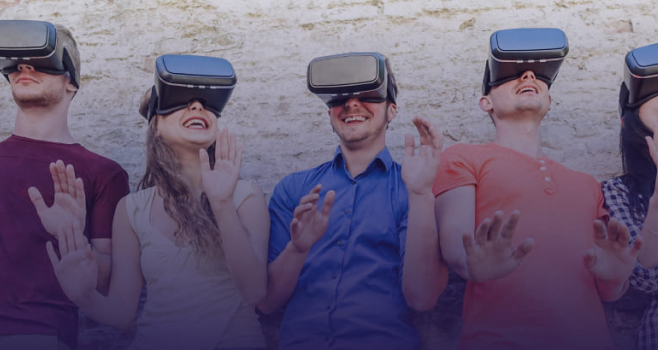
Mixed Reality sits between the two. Digital objects don’t just float on top of reality; they interact with it. A holographic prototype placed on an actual conference table, responding to touch and perspective shifts, is MR in practice.
Why does this taxonomy matter for digital transformation consulting and enterprise AI solutions planning? Because each modality demands different infrastructure, different device types, and very different use cases. Deploying VR where AR would suffice wastes investment. Choosing AR where full immersion is needed limits impact. Getting this right is the first, most consequential call any enterprise makes before committing to spatial computing at scale.
The shape of things to come
Google’s Glass Enterprise Edition 2 is a useful window into where AR/VR is actually headed. Priced at US$999 and built around Qualcomm’s Snapdragon XR1 chip with advanced machine learning capabilities, it’s designed not for consumers playing games but for factory workers and surgeons making split-second decisions. That’s a meaningful distinction. It signals a shift from novelty to necessity, from entertainment to enterprise-grade digital transformation.
But hardware is only half the story. As organizations like Adobe and Google build sophisticated AR/VR authoring tools, and as standardization matures across devices, the barriers to deploying immersive experiences at scale are falling. Enterprises that once struggled to justify AR/VR investments now have a clearer path, with software capable of extending experiences across smartphones, tablets, and wearables alike.
Then there’s 5G. Ultra-reliable, low-latency networks don’t just improve AR/VR performance; they make mission-critical use cases viable. A surgeon performing remote procedures through an AR headset can’t afford network lag. Neither can a manufacturing engineer running real-time diagnostics on the floor. When 5G infrastructure catches up with the ambition of these enterprise AI applications, the combination of cheap devices, smart software, and fast connectivity creates conditions for genuinely unconventional thinking about how work gets done.
What industries stand to gain? Medical facilities, manufacturing plants, field services, technical training, hazardous operations, retail environments. The list isn’t a prediction. It’s already happening.
The new business of “reality”
What’s striking about the early AR/VR deployments isn’t the technology itself. It’s the sheer range of enterprise problems they’re quietly solving. Ikea lets shoppers place true-to-scale 3D furniture anywhere in their homes before buying. Marriott teleports guests to destinations they haven’t booked yet. Lenskart turns a five-second phone video into a virtual try-on session for thousands of frames. These aren’t novelty experiments. They’re enterprise AI applications redefining how customers discover, evaluate, and commit.
The industrial side is just as telling. GE Aviation reports 8 to 12% efficiency gains after equipping mechanics with AR headsets that surface torque specifications in real time, no manual required. Construction teams now see buried utilities through AR overlays, cutting excavation costs and project timelines. A Korean baseball stadium used 5G-connected AR to make a mythical dragon respond to fans pressing buttons on their phones. Each of these examples answers a genuine operational question: can digital transformation with AI reshape physical-world workflows, not just dashboards?
The answer, increasingly, is yes. And the window for hi-tech digital solutions built on immersive experience is opening faster than most digital transformation consulting firms anticipated. Enterprises that treat AR/VR as a consumer curiosity risk watching competitors use it to train workforces, reduce field errors, and build the kind of enterprise AI solutions customers don’t forget.
Next step: Getting real with AR/VR
Three forces are converging right now, and the window for smart enterprise action is narrowing fast. Affordable AR/VR devices are reaching critical mass. Organizations like Adobe and Google are building sophisticated authoring tools that dramatically raise the quality of immersive experiences. And standardization efforts mean those experiences will travel cleanly across device ecosystems, not stay trapped inside proprietary hardware.
That combination changes the strategic calculus entirely. AR/VR is no longer a proof-of-concept category where hi-tech enthusiasts run pilots and write up learnings. It’s becoming infrastructure. Customer experience, employee training, field operations, product development consulting, safety protocols in hazardous environments: each of these domains has a compelling near-term AR/VR use case that enterprises can build around today.
But getting there requires more than buying headsets. It demands a genuine digital transformation consulting mindset, one where leaders ask not just what AR/VR can replace, but what it makes newly possible. The enterprises that will lead are those already connecting immersive technology to broader ai digital transformation strategies, where generative AI drives personalization inside the experience, automation handles content at scale, and enterprise AI solutions tie the whole thing to measurable business outcomes.
The question for leaders isn’t whether AR/VR will matter to their business. It’s how quickly they can move from observation to execution, and whether their digital transformation consulting framework is built to absorb and deploy technologies that rewrite the rules of human-computer interaction.